A confident answer is not the same as an answer supported by a course's evidence. In clinical education, a learner may ask a narrow question, add an unexpected assumption or combine ideas from different modules. A conversational response can sound helpful while moving beyond what the programme has actually reviewed.
Perceptors is an applied AI in healthcare education company. Its learner Guide answers from approved sources. The educational value of that approach depends on more than displaying a reference beside a paragraph. Educators need to understand what the sources support, what the response adds and how the Guide should behave when the answer is not available.
Start with the difference between fluency and evidence
Fluency describes how an answer reads. Grounding describes its relationship to the material it is supposed to use. A clear explanation may still contain an unsupported inference, omit an important condition or apply a statement outside its original context.
Treat these as different review questions. Ask whether the language is understandable, then ask whether each substantive claim is supported by the approved material. Do not let an impressive tone settle the second question. Learners should be able to inspect why an answer belongs within the course rather than being asked to trust its confidence.
Define the source boundary
An institution should decide which materials are approved for a course and which are background reading. That boundary gives reviewers a practical basis for checking answers. It also helps explain why a plausible answer may still be outside the Guide's educational remit.
Decide what an approved source means here
Approval should refer to an identifiable version and a defined use. An article discussed critically in a module is not automatically an instruction the programme endorses. Record whether a document supplies a definition, supports an explanation or describes a disputed position. Those distinctions matter when a learner asks for a simple answer to a complicated question.
Make citations useful rather than decorative
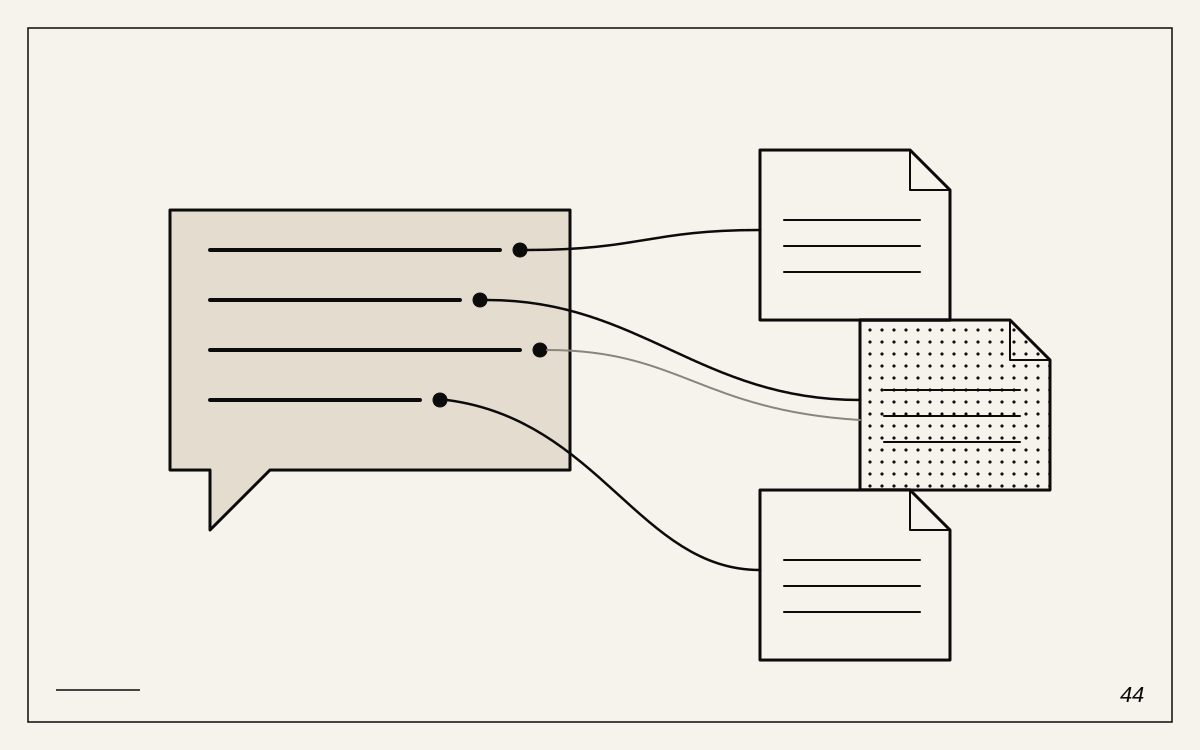
A citation should help the learner find the material that supports the answer. Review whether the reference leads to the relevant document and whether the cited passage actually addresses the question. A familiar title attached to an unrelated claim is not meaningful support.
Educators can test this by reading the response without its citation, identifying its main assertions and then checking each against the source. Where a response combines several ideas, one reference may not explain the whole chain of reasoning. The review should consider the explanation and its evidence together, not merely count links.
Preserve the qualifications in the source
Clinical learning materials often depend on context: the population discussed, the setting, the purpose of an intervention or the limits of an observation. A shorter answer should not turn a conditional statement into a universal rule. Nor should a teaching example quietly become a recommendation for an individual person.
Ask reviewers to look specifically for missing qualifications. Does the answer distinguish a general educational explanation from a local protocol? Has it retained uncertainty where the source is uncertain? Has it made a comparison that the source does not make? These questions are more revealing than asking only whether the answer sounds reasonable.
Design a useful response when evidence is missing
An appropriate “no source found” response should make the boundary understandable. It can explain that the approved course materials do not establish an answer, identify which part of the question could not be supported and suggest an educational next step.
It should not fill the gap with a confident guess. It should also avoid implying that absence from a course proves something is false. A sensible next step might be asking the programme team to review the question or pointing the learner back to a relevant module. This is a recommended response pattern to evaluate, not a claim that every edge case has been resolved.
Keep the learning role explicit
A learner Guide supports understanding of the course. It should not be presented as a substitute for professional judgement, a local clinical decision process or advice about an individual patient. That distinction needs to be understandable in the wording learners see, not hidden inside an abstract technical description.
For a hypothetical question that asks how a course concept applies to a particular person, reviewers should consider whether the Guide can return to the educational principle without pretending to make that person's care decision. The useful outcome is a clearer understanding of the approved material, not an unsupported extension of its authority.
Test questions that challenge the boundary
Do not evaluate the Guide only with questions copied from section headings. Try ambiguous wording, a premise the course does not support, a request for information beyond the curriculum and a question whose answer depends on a qualification. Ask whether citations remain relevant as the wording changes.
Keep a review record that pairs the question, response, source passage and reviewer decision. Use the course governance guide to structure the institutional discussion about ownership and approval. The record should show why a response was accepted or revised, not merely whether someone liked its tone.
Review the course and guide together
Sometimes the problem is not the response alone. The course may contain conflicting language, an unclear definition or an incomplete explanation. Source-grounded learning support makes those editorial questions worth examining rather than treating every difficulty as a prompt-writing problem.
The platform overview provides context for the reviewed course workflow. Institutions should also use their own review questions to assess whether source boundaries remain clear as materials change. Discuss deployment-specific questions through the trust information without treating a product description as an assurance about every institutional setting.
Make evidence inspection part of learning
Citations are most useful when learners are encouraged to follow them, examine the supporting material and recognise the limits of an answer. Good learning support can model that habit instead of rewarding confidence alone.
Start with a defined source collection, review representative questions and agree what should happen when the evidence does not answer. That creates a concrete basis for discussing a Guide that supports the institution's educational purpose while keeping the authority of approved sources visible.
Sources and further reading
Educational planning guidance from the Perceptors team. Programme eligibility and review requirements must be confirmed for the proposed course.